Erica Bockelmann Designer Spotlight, Where Coastal Calm Meets Real-Life Planning
Most “coastal” interiors look right until you live in them. Then the glare shows up, the traffic pattern fights you, and the pretty storage fails by week three. That’s why I keep coming back to the DesignerInc editorial lens at ByDesign., because it consistently centers the kind of work that holds up under real life.
Erica Bockelmann of Shell Beach Design Build gets that balance right. Her California Central Coast projects feel relaxed, but they’re not casual about performance. Stay with me and you’ll see how her design plus build fluency shapes spaces that read soft, yet run tight.
Why Erica’s rooms feel easy, not “done”
There’s a quiet confidence in Erica’s work. Sun-washed color, natural texture, and clean architectural lines show up again and again. And yet it never lands as “set dressing” for a camera.
That ease isn’t an accident. It’s restraint, and it’s editing. She lets the materials do the heavy lifting, then she gets out of their way—no filler moments, no nervous decorating just to prove you finished the room.
If you track the kinds of professionals featured in DesignerInc’s designer coverage, you’ll spot the same trait: serious designers don’t over-explain a room. They build clarity into it, and that clarity reads as calm.
And yes, it’s emotional. People walk in and exhale. In my experience, that’s the benchmark that matters—not the Instagram save count.
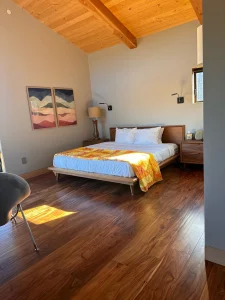
The build knowledge that changes the entire outcome
Designers love to say they “think through construction.” Then framing starts, the plumber’s on site, the electrician needs answers, and suddenly everyone’s making decisions in the hallway. Erica doesn’t melt down there, because construction is part of her lane.
That shows up in the unsexy details that make or break a project. Door swings get settled before they become a punch-list fight. Lighting gets planned around real sightlines—where you actually stand, where you actually sit—not a glossy inspiration photo taken with a wide-angle lens.
Even trim profiles and reveal depths get treated like design tools, not the leftovers you eyeball at the end. (If you went to design school, you know this is where proportion lives. If you didn’t, trust me: your eye still feels it.)
For designers who want to sharpen this muscle, spend time in DesignerInc’s industry articles. The best guidance is rarely about style. It’s about coordination, sequencing, and the stuff that saves you from a change order spiral.
Function first, but make it feel like nothing
Here’s what most people miss: the most functional homes don’t feel “optimized.” They feel calm. Erica designs for how a family actually moves through a kitchen on a busy morning, then she hides the evidence.
You can spot that kind of planning when the house doesn’t nag at you. No shoulder-checking around an island. No pantry that turns into a junk closet because the shelves were drawn for a photo, not a person.
That thinking shows up in a few repeatable decisions. If you’re building your own checklist, start here.
- Plan storage by behavior, not by category. Use zones based on habits.
- Protect the landing areas. Entries, drop zones, and pantry counters take hits.
- Never ignore light at 4 p.m. Afternoon glare ruins more “pretty” rooms than you think.
This is also where manufacturer relationships start to matter. When you browse DesignerInc’s manufacturer features, you’ll see why. The right cabinet maker or hardware partner doesn’t just sell you parts—they make smart planning look inevitable.
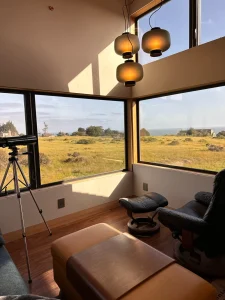
Material choices that age with dignity
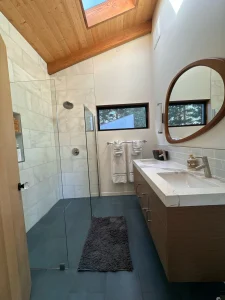
Coastal palettes can go two ways. They can get chalky and flat, or they can stay luminous for years. Erica leans toward materials that carry gentle variation, so the room doesn’t depend on “newness” to feel alive.
Think natural wood tones, stone with movement, and textures you want to touch. Not the scratchy basketweave that looks charming in a showroom and feels like sandpaper after the third time you brush against it in a hallway.
She also seems to understand something a lot of clients need to hear out loud: patina isn’t a risk. It’s a design asset—if you plan for it. If you don’t plan for it, you get panic at the first nick and you spend the next five years policing your own house.
Finish performance is the unglamorous side of this. Paint sheen in a high-traffic hall matters. So does the difference between a honed and polished stone in a family bath. The NKBA’s guidance on kitchen planning is a helpful reality check for traffic flow and safety expectations at scale, not just taste. See NKBA for standards that still hold weight with builders and clients.
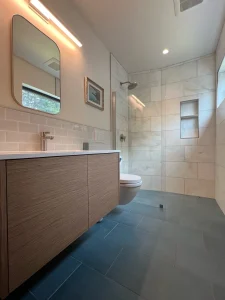
The soft power of architectural detail
Erica’s interiors don’t rely on trendy furniture silhouettes to feel current. She leans on architecture instead. Trim, negative space, and proportion do a lot of the heavy lifting.
That’s a smart move right now, because trends swing fast and lead times still surprise people. I’ve watched designers fall in love with a look online, then wait 16 weeks for the wrong piece—the one that’s “close enough” in a spec sheet but totally off in scale when it hits the room. It’s brutal. It’s also avoidable.
When architecture is doing the work, the room doesn’t collapse if a chair gets backordered or a table comes in two inches larger than expected. You have a structure that can take a hit.
One reason I like DesignerInc’s editorial approach is the consistent attention to craft and construction. Browse manufacturer highlights when you’re specifying detail-driven work. You’ll see options that support architecture instead of competing with it.
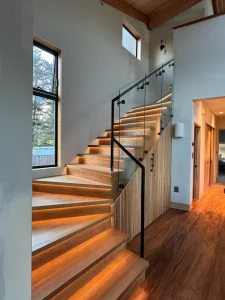
How to talk clients out of “coastal clichés”
Clients often ask for coastal, then point to the same three reference images. White everything. Rope details. A little too much “beach.” Let’s be real about this: that look dates fast, and it rarely fits how people actually live.
Erica’s approach gives you a better script. You can sell the feeling without buying the costume. When you’re in that client meeting and you can see the seashells coming, try framing it like this.
- Coastal is light behavior, not seashell decor.
- It’s airflow and circulation, not shiplap everywhere.
- It’s texture and restraint, not a theme.
If you want language that supports this without sounding precious, pull from DesignerInc editorial highlights. The best writing gives you client-friendly phrasing that still respects the craft.
What designers can borrow from Erica’s process
You don’t need to run a design build firm to learn from her. You do need to think like a coordinator, not just a curator. Erica’s work suggests a process where design intent and build reality stay in the same room, at the same time, with no pretending.
I’ve watched this play out so many times: if the plan is shaky, everything else becomes expensive theater. If the plan is strong, the “pretty” part gets easier, not harder.
Three habits make the difference in most projects.
- Lock the functional plan early. Elevations can evolve, but circulation should not.
- Specify with lead times in mind. Confirm, then confirm again.
- Choose fewer materials, but choose better. Let repetition create calm.
This is where the DesignerInc ecosystem becomes genuinely useful. If you’re trying to build a tighter sourcing bench, read through manufacturer featurettes and track who shows consistency across categories. That’s how you avoid the “new vendor every project” chaos.
Why this kind of calm is the next luxury
Luxury used to mean rarity. Now it often means ease. Quiet mornings in a kitchen that works. A hallway that doesn’t bottleneck. Storage that absorbs the mess without announcing itself.
Clients are tired. They don’t want a house that needs managing. They want a home that behaves—especially the ones juggling kids, work, and the daily chaos we all pretend we’re not living in.
Design media is catching up to this, too. Business of Home has covered how clients are prioritizing function, longevity, and service in purchasing decisions. Their reporting is worth following when you’re calibrating expectations and budgets. Start at Business of Home.
Erica’s projects sit right in that lane. Relaxed, refined, and built for the long game. That’s not a vibe. That’s a strategy.
Explore the DesignerInc Community
If Erica’s work resonates, take it as a nudge to tighten your own sourcing and collaboration habits. The designers who last aren’t guessing. They’re building trusted relationships with makers, reading the room on timing, and specifying with intention.
That’s exactly what DesignerInc supports, and it does it with a point of view that respects your intelligence. Discover DesignerInc
Visit Erica Bockelmann
Website: https://shellbeachdesignbuild.com